When Catholics debate evangelicals, the most common question they have is, Do evangelicals have a doctrine of the church? If so, what is it? Timothy George, dean of Beeson Divinity School at Samford University and a senior adviser for CHRISTIANITY TODAY, found himself answering just those questions last year before a group of Catholic theologians, including representatives from the Vatican. His talk at this meeting of Evangelicals and Catholics Together addressed what many consider an oxymoron—evangelical ecclesiology. Here is a radically condensed version of that talk, which shows that evangelicals have good answers to these questions.
On July 29, 1928, a young evangelical pastor began his sermon on Paul's teaching on the body of Christ in 1 Corinthians with these words: "There is a word that, when a Catholic hears it, kindles all his feeling of love and bliss; that stirs all the depths of his religious sensibility, from dread and awe of the Last Judgment to the sweetness of God's presence; and that certainly awakens in him the feeling of home; the feeling that only a child has in relation to its mother, made up of gratitude, reverence, and devoted love . …
"And there is a word that to Protestants has the sound of something infinitely commonplace, more or less indifferent and superfluous, that does not make their heart beat faster; something with which a sense of boredom is so often associated. … And yet our fate is sealed, if we are unable again to attach a new, or perhaps a very old, meaning to it. Woe to us if that word does not become important to us soon again. … Yes, the word to which I am referring is Church."
So spoke Dietrich Bonhoeffer to a small German congregation in Barcelona. These words present both a diagnosis and a challenge for evangelicals today who are called to set forth a clear, compelling doctrine of the church in their new conversations with their Roman Catholic brothers and sisters, and who need it to help them sort out their loyalties in a bewildering bazaar of denominations, parachurch ministries, and independent congregations.
As a global, transdenominational fellowship of one-half billion believers, evangelicalism is an amazing ecumenical fact. As a theological movement, however, evangelicalism has been slow to develop a distinctive understanding of the church. There are several reasons for this:
First, evangelical scholars have been preoccupied with other theological themes such as biblical revelation, religious epistemology, and apologetics. For example, Carl F. H. Henry's six-volume magnum opus, God, Revelation and Authority, extends to more than 3,000 pages with little ink spent on the doctrine of the church.
Second, as an activist movement committed to evangelism and missions, evangelicalism has not made reflective ecclesiology a high priority. As some might say, "We are too busy winning people to Christ to engage in navel gazing." This objection should not be quickly dismissed, for as missiologist J. C. Hoekendijk observed, "In history a keen ecclesiological interest has, almost without exception, been a sign of spiritual decadence."
Third, evangelicalism is a splintering movement representing a bewildering diversity of congregations, denominations, and parachurch movements. Their shared identity is not tied to a particular view of church polity or ministerial orders.
Amidst such variety, is it even possible to describe one single, or even central, evangelical ecclesiology? The evangelical witness emerged not only as a protest against abuses in the church but also as a testimony for the truth of the gospel (we are protestants). How evangelicalism maintains the centrality of gospel truth within ostensibly weak structures of church authority is perhaps its greatest challenge today. However, within the evangelical tradition—in its confessions and hymns no less than its formal theological reflections—there exists a rich reservoir for articulating a strong doctrine of the church. One resource we share with the broader Christian tradition is the Nicene Creed. I would like to explore here what evangelicals mean when we affirm our belief in the church as "one, holy, catholic, and apostolic."
The church is one
In his letter to the Ephesians, the Magna Carta of the church, Paul urges, "Make every effort to keep the unity of the Spirit through the bond of peace. There is one body and one spirit—just as you were called to one hope when you were called—one Lord, one faith, one baptism; one God and Father of all, who is over all and through all and in all" (4:3-6; all references taken from the NIV). Thus the unity of the church is based on the fact that we worship one God.
Neither Luther nor Calvin intended to start a new church, but to reform the church. As Calvin put it, "To leave the church is nothing less than a denial of God and Christ." By contrast, Continental Anabaptists, English Separatists, and biblical restorationists sought not so much to purify the church as to restore it to its original New Testament condition. Thus by gathering new congregations of "visible saints," these radical reformers believed they could restore, as one of them put it, "the old glorious face of primitive Christianity."
Article continues below
The result was the proliferation of numerous denominations and sects, "separated brethren," who were often more separated than brotherly in their relations! This little ditty from the early nineteenth century describes the resulting confusion:
Ten thousand reformers like so many moles,
Have plowed all the Bible and cut it in holes;
And each has his church at the end of his trace,
Built up as he thinks of the subjects of grace.
At the same time, we must realize that the restorationist impulse was itself motivated by a concern for Christian unity. In the early nineteenth century, Alexander Campbell wanted his followers to be called simply "Christians" or "disciples of Christ" as a way of overcoming denominational disharmony, even if in the end his movement too added still another competing note to the Protestant chorus.
Evangelicals today are heirs of both reformational and restorational models of ecclesiology. Their approach to church order, ministry, and ecumenism often depends on which of these two paradigms they more identify with.
The fact that most evangelicals are less than enthusiastic about the modern ecumenical movement in its liberal Protestant modality does not mean that they have no concern for the unity of the church. It does mean, however, that the question of the church's unity cannot be divorced from the question of the church's integrity. The call to be one in Christ rings hollow when it comes from church leaders who either themselves deny, or wink at others who do, the most basic Christological affirmations of the faith, including the virgin birth, bodily resurrection, and actual return of Christ himself.
Thomas Oden speaks for many evangelicals when he declares: "Too many pretentious pseudoecumenical efforts have been themselves divisive, intolerant, ultrapolitical, misconceived, utopian, abusive, nationalistic, and culturally imperialistic. … Hence modern ecumenical movements are themselves called to repentance on behalf of the unity of the Church."
But evangelicals too are called to repentance. We too have sinned against the body of Christ by confusing loyalty to the truth with party spirit, and kingdom advancement with self-aggrandizement. We need the wisdom of the Holy Spirit to know when, like the Confessing Church in Nazi Germany, it is necessary to stand against schemes of false church unity and compromised theology to declare, "Jesus Christ, as he is testified to us in the Holy Scripture, is the one Word of God, whom we are to hear, whom we are to trust and obey in life and in death."
Article continues below
The church is holy
Of the four classic attributes of the church, holiness is the one best attested in the most primitive versions of the baptismal creed: "I believe in the holy church."
The church on earth is holy not because it is set apart in its external organization, as though it were a sanitarium in the midst of contagion. It is holy only because it is animated by the Holy Spirit and joined with its heavenly Head, Jesus Christ.
Evangelicals insist, however, that the holiness of God be clearly distinguished from the holiness of the church. The holiness of the church on Earth is entirely derived, emergent, and incomplete. God's is eternal and unbroken by imperfection and finitude. Thus we take exception to the statement of Yves Congar that "there is no more sin in the church than in Christ, of whom she is the body; and she is his mystical personality."
Luther, though insisting that the one crucial mark of the church was and remained the gospel, also said much about good works and growth in holiness as the fruit of having been declared righteous by God through faith alone. Later Reformers placed more emphasis on the "marks of the true church" (Word and sacrament for Luther and Calvin, discipline as well for later Reformed confessions, English Separatists, and Anabaptists). Calvin, in particular, is clear about the function of the marks: "For, in order that the title 'church' may not deceive us, every congregation that claims the name 'church' must be tested by this standard as by a touchstone."
The evangelical marks—proclamation, worship, and discipline—are thus distinguished from the Nicene attributes because they are not merely descriptive, but dynamic: they call into question the unity, catholicity, apostolicity, and holiness of every congregation that claims to be a church. In this way, as Calvin says, "the face of the church" emerges into visibility before our eyes.
By elevating discipline as a distinguishing mark of the church, Puritans, Pietists, and the early Methodists defined the true visible church as a covenanted company of gathered saints. It is separated from the world in its organization and through its congregational discipline of erring members.
Article continues below
Such disciplinary measures weren't meant as punitive. They were intended to underscore the imperatives of life and growth within the church. The church, in turn, was understood as an intentional community of mutual service and mutual obligation by which "the whole body, bonded and knit together by every constituent joint … grows through the due activity of each part, and builds itself up" (Eph. 4:16). The strenuous use of church discipline sometimes degenerated into petty legalism. But at its best, it provided a context for Christian catechesis, nurture, and outreach that stands in marked contrast to the kind of casual Christianity so prevalent in our own day.
The church is catholic
Most evangelicals are happy to confess that the church is one, holy, and apostolic. These are, after all, not only biblical concepts but also New Testament terms. But in what sense can evangelicals affirm "We believe in the catholic church"? Many contemporary evangelical churches have long abandoned the word catholic. Some have gone so far as to alter the traditional wording of the creeds to avoid even pronouncing the word! But none of this changes the fact that evangelicals are catholics. They believe that in its essence the Christian community is in all places and in all ages the one, holy, universal church.
The Reformers of the sixteenth century and the Puritans of the seventeenth, not excluding Baptists, were happy for their churches to be called catholic. Indeed, they opposed the Church of Rome not because it was too catholic, but because it was not catholic enough. They spoke of the evidence for catholicity in three ways: in its geographical extent (the church is spread over the whole world); in its inclusive membership (the church is gathered from all ranks of society); and in its indefectibility (the church is built on the promise of the risen Christ: "I will be with you always, to the very end of the age" ).
Evangelical expositors, however, were careful to point out that historical continuity, numerical quantity, and cultural variety do not themselves constitute true catholicity. The true church may be quite small: Where two or three of you are gathered together in my name, Jesus said, there I am in your midst. This "I" is the only basis of true catholicity. As Barth wrote, "The Real Church is the assembly which is called, united, held together and governed by the Word of her Lord, or she is not the Real Church."
Perhaps evangelical catholicity today is best seen in its worldwide missionary vision. Indeed, what ecumenism is to post-Vatican II Catholicism, world evangelization is for evangelicalism: not an added appendix, but an organic part of its life and work. The effort to share the gospel with those who have never heard was at the heart of William Carey's mission to India in 1793, an event that launched what Kenneth Scott Latourette called "the great century" of Protestant missions. This witness continues today through the mission boards of evangelical denominations and a vast network of international parachurch ministries such as the Billy Graham Evangelistic Association, Campus Crusade for Christ, World Vision, and Prison Fellowship.
Article continues below
The church is apostolic
Because the church is one, holy, and catholic, it is also apostolic. This word was added to the Nicene description of the church in 381, but it was clearly expressed already in Paul's metaphor of the church as God's house, "built on the foundation of the apostles and the prophets" (Eph. 2:20). That church is apostolic which stands under the authority of the apostles, whom Jesus chose and sent forth in his name.
Evangelicals, no less than Roman Catholics, claim to be apostolic in this sense. But the two traditions differ sharply in understanding the transmission of the apostolic witness from the first century until now. Catholics believe that the church continues to be "taught, sanctified, and guided by the apostles … through their successors in pastoral office: the college of bishops, assisted by priests, in union with the successor of Peter, the church's supreme pastor." As heirs of the Reformation, evangelicals do not define apostolicity in terms of a literal, linear succession of duly ordained bishops. They point instead to the primordial character of the gospel, the inscripturated witness of the apostles, and the succession of apostolic proclamation.
Perhaps evangelical catholicity
today is best seen in its
worldwide missionary vision.
While the church is indeed built on the foundation of the apostles and the prophets, there is something even more basic: the message they proclaimed—Jesus Christ and him crucified. This is a constant note throughout the ministry of Paul, who wrote to the Corinthians, "For we do not preach ourselves, but Jesus Christ as Lord, and ourselves as your servants for Jesus' sake" (2 Cor. 4:5).
As the authorized representatives of Jesus Christ, the apostles have faithfully and accurately transmitted their authoritative witness to their Lord in the divinely inspired writings of Holy Scripture. The teaching authority of the apostles, evangelicals believe, thus resides in the Old and New Testaments, the self-authenticating Word of God.
Article continues below
Evangelicals and Catholics differ about which books are included in the canon of Scripture and also about the role of the early church in its formation: Was the canon the creation of the church, or was the church the place of reception for the canon? Both, nonetheless, share a common commitment to the Scriptures as the divinely inspired Word of God. (Indeed, documents in both traditions appeal to the Bible as "inerrant.")
For evangelicals, the principle of sola Scriptura means that all the teachings, interpretations, and traditions of the church must be subjected to the divine touchstone of Holy Scripture itself. But sola Scriptura is not nuda Scriptura. While evangelicals cannot accept the idea of tradition as a coequal or supplementary source of revelation, neither can we ignore the rich exegetical tradition of the early Christian writers whose wisdom is vastly superior to the latest word from today's guilded scholars. The consensus of thoughtful Christian interpretation of the Word through the ages—and on central issues of faith there is such a thing—is not likely to be wrong. Evangelicals have much to learn from the way the Bible was read in ages past.
For evangelicals, public preaching of the Word of God is a sign of apostolicity. Through the words of the preacher, the living voice of the gospel is heard. The church, Luther said, is not a "pen house" but a "mouth house." The Second Helvetic Confession (1566) goes so far as to say that "the preaching of the Word of God is the Word of God." But evangelicals should not let the almost sacramental quality of preaching in our tradition obscure the importance of the "visible words" of God in baptism and the Lord's Supper. Evangelicals, no less than Catholics, should strive for a proper balance among these constituent acts of worship. In doing so, of course, evangelicals must not compromise the priority of proclamation, for as in the time of the apostles, "God was pleased through the foolishness of what is preached to save those who believe" (1 Cor. 1:21).
A worthy maid
"I believe in one, holy, catholic and apostolic church," Archbishop William Temple once remarked, "but regret that it doesn't exist." To which the evangelical responds: If by exist we mean perfect, complete, unbroken, infallibly secure, verifiably visible in its external structures, then it is clear that such a church does not exist in this world. In this world the true church is always in a state of becoming. It is buffeted by struggles and beset by the eschatological "groanings" that mark those "on whom the fulfillment of the ages has come" (Rom. 8:18-25; 1 Cor. 10:11).
Article continues below
In 1525, Luther wrote a lyrical hymn praising the church:
To me she's dear, the worthy maid,
and I cannot forget her;
Praise, honor, virtue of her are said;
then all I love her better.
On earth, all mad with murder,
the mother now alone is she,
But God will watchful guard her,
and the right Father be.
To the eyes of faith, the church is a "worthy maid," the Bride of Christ. But by the standards of the world, she is a poor Cinderella surrounded by many foes. Wrote Luther: "If, then, a person desires to draw the church as he sees her, he will picture her as a deformed and poor girl sitting in an unsafe forest in the midst of hungry lions … in the midst of infuriated men who set sword, fire, and water in motion in order to kill her and wipe her from the face of the earth." In God's sight, the church is pure, holy, unspotted, the Bridegroom, Christ: "hacked to pieces, marked with scratches, despised, crucified, mocked."
As evangelicals and Catholics pursue theological dialogue, moved by our love for the truth and for one another, we must not forget this ecclesiology by opting for an easy armchair ecumenism, heady and aloof. All our plans will ring hollow unless we stand in solidarity with our brothers and sisters in Christ, who live under the shadow of the cross and whose faithful witness is leading many of them to the shedding of their blood for the gospel.
Several months ago on a visit to Germany, I was taken to what remains of the concentration camp at Buchenwald near Weimar. Here more than 65,000 people were put to death by a totalitarian regime which saw in the Christian faith, in both its Catholic and Protestant expressions, a threat to the ideology of death. At Buchenwald there was one block of cells reserved for especially "dangerous" prisoners.
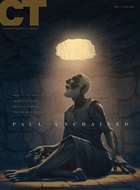
In cell 27 they placed Paul Schneider, a Lutheran pastor, who came to be called "the Preacher of Buchenwald." From the small window in his cell he loudly proclaimed Jesus Christ in defiance of the orders of the Gestapo guards. In cell 23 they placed Otto Neururer, a Catholic priest, whose work on behalf of the Jews and other so-called undesirables had made him a threat to the Nazi war lords. He too ministered to the prisoners in Jesus' name.
Article continues below
Together, a son of Rome and a son of the Reformation, separated no longer by four centuries but only by four cells, walked the way of the cross and together bore witness to their Lord. Their common witness does not remove all the differences between their respective communities of faith. But we remember them and thank God for them as well as for the countless others who have and will share a fellowship in the sufferings of Jesus. For today, as in ages past, the blood of the martyrs is the seed of the church—the one, holy, catholic, and apostolic church.















 While we pray for peace, we need moral clarity about this war.
 Church movements need magnetic leaders. But the best leaders need more than charm.
 American Bible Society study finds majority don’t trust technology with spiritual matters.